Research pathway

How EarthGuard turns evidence into action

  • Baseline surveys and feasibility studies
  • AI, GIS, soil health mapping, SmartFarm trials, SmartFishAI aquiculture pilots, and livelihood studies
  • Environmental assessments and project monitoring
  • Food security, renewable energy modeling, water access, catchment health, and forest-region evaluation
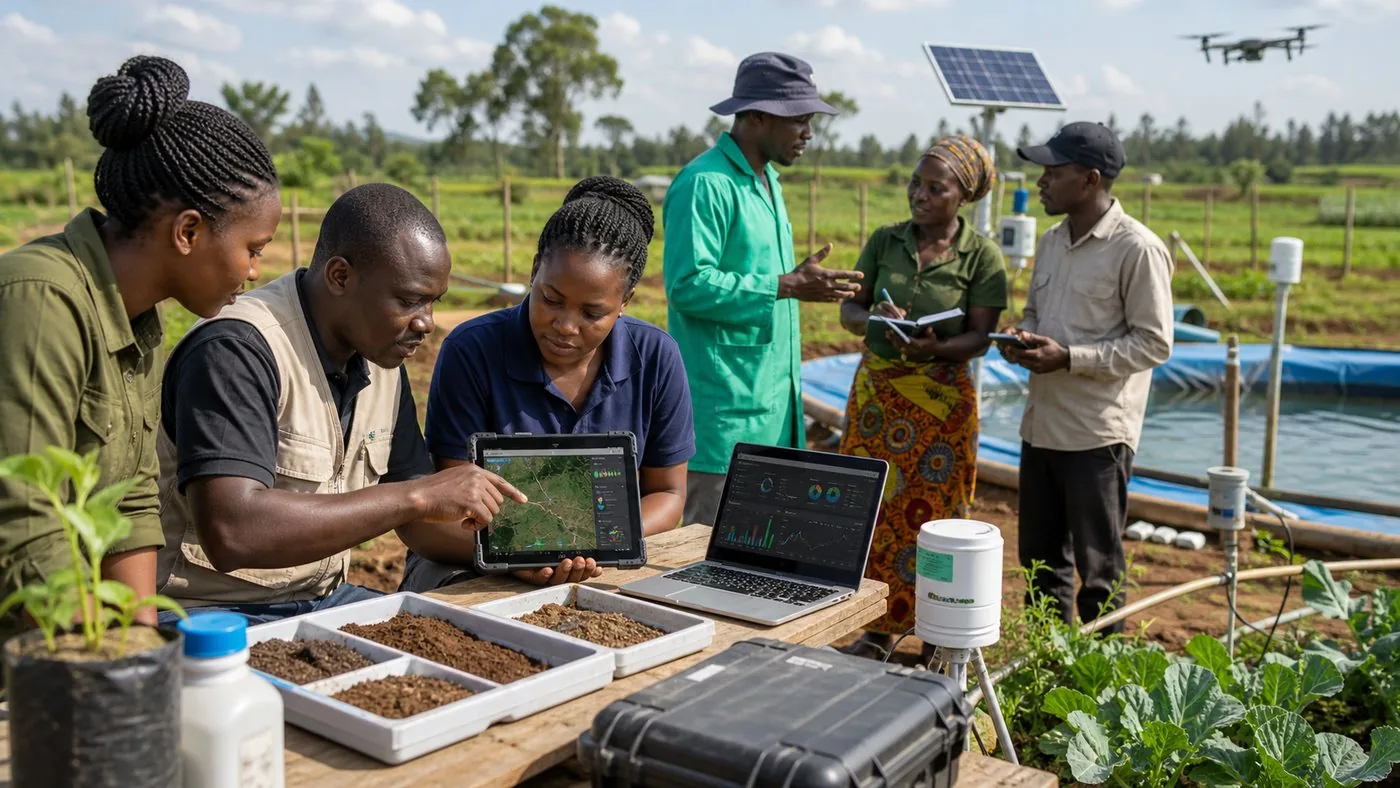
Field team reviewing soil samples, GIS farm maps, and sensor data

Applied research

Better projects begin with better local evidence

EarthGuard documents local knowledge, collects field data, tests appropriate technologies, and shares lessons with communities, government agencies, universities, donors, and development partners.

Core research tools

  • Community needs assessments
  • Farm and water-point field records
  • Soil sampling and GIS mapping
  • Technology and livelihood feasibility studies
  • Partner-ready learning notes
  • Local validation with community groups

Who can use it

  • Donors and NGOs designing programs
  • Universities and research teams
  • County and local government teams
  • Schools and farmer groups
  • Technology partners testing solutions

Impact logic

Evidence that improves decisions before money and time are wasted

Each research pathway is designed to help communities, funders, and technical partners understand what is happening locally, select the right intervention, and measure whether the work is improving lives.

Listen

Collect local knowledge, risks, and priorities.

Start with local realities, user needs, and field constraints.

Test

Run practical pilots and field trials.

Connect practical data with technical interpretation.

Share

Turn lessons into reports, training, and scaling plans.

Turn evidence into guidance, reports, and implementation choices.