How it works

Restore ecosystems with communities

  • Map degraded catchments, erosion risks, forest pressure, wetlands, waste hotspots, and local priorities.
  • Establish indigenous tree nurseries, agroforestry plots, riparian buffers, and school environmental clubs.
  • Connect restoration with recycling, climate education, soil and water protection, and green livelihoods.
  • Track seedling survival, vegetation recovery, water quality, waste recovery, and community participation.
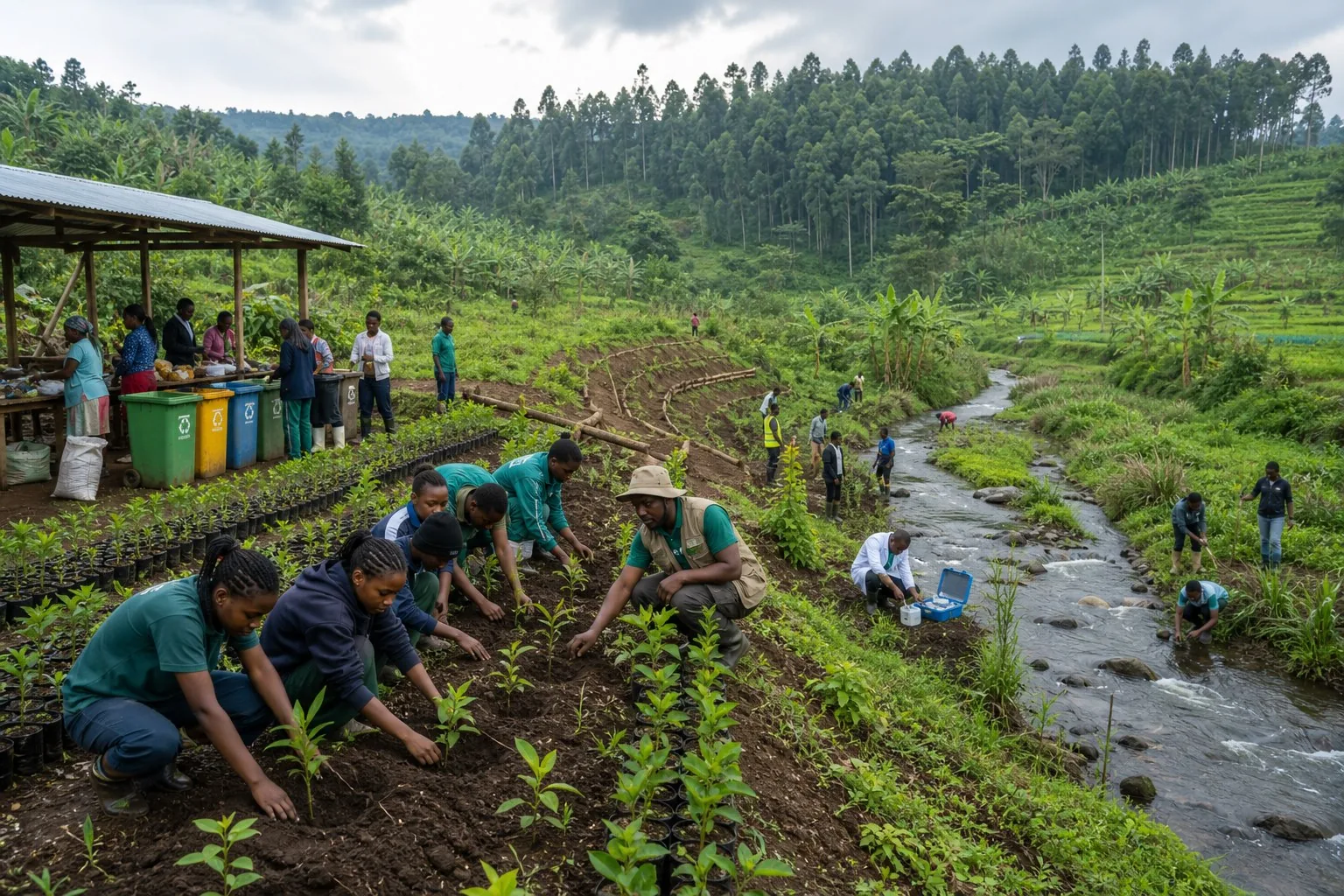
Community members restoring a Kenyan catchment through tree nurseries, riparian planting, water checks, and recycling

Climate action program

Environmental conservation and climate action

EarthGuard supports community-led restoration through tree nurseries, agroforestry, catchment and forest protection, wetland care, waste recovery, climate education, and practical environmental monitoring.

Restore

Nurseries and landscapes

Indigenous seedlings, agroforestry, assisted regeneration, and survival-focused planting.

Protect

Catchments and forests

Riparian buffers, erosion control, wetland care, water monitoring, and forest stewardship.

Recover

Waste and circular action

Sorting, cleanups, recycling partnerships, pollution prevention, and local reuse pathways.

Learn

Climate education

School clubs, community learning, local climate risks, field evidence, and green skills.

Program focus

  • Community tree nurseries and seedling systems
  • Agroforestry and degraded-land restoration
  • Water catchment, wetland, and riparian protection
  • Forest-region monitoring and stewardship
  • Waste management, recycling, and pollution reduction
  • Climate education and school environmental clubs

Who benefits

  • Catchment and forest-edge communities
  • Schools and environmental clubs
  • Farmers and agroforestry groups
  • Youth and women green enterprises
  • Conservation agencies and research partners