How it works

Learning sites that turn training into practice

Demonstration farms make EarthGuard programs visible and practical, giving communities a place to test better farming before scaling.

  • Host farmer field days, school visits, and practical extension sessions.
  • Test irrigation layouts, seedling systems, soil conservation, and value-addition ideas.
  • Record crop performance, water use, soil health, training participation, and adoption.
  • Use lessons to improve future agriculture, water, and livelihood projects.
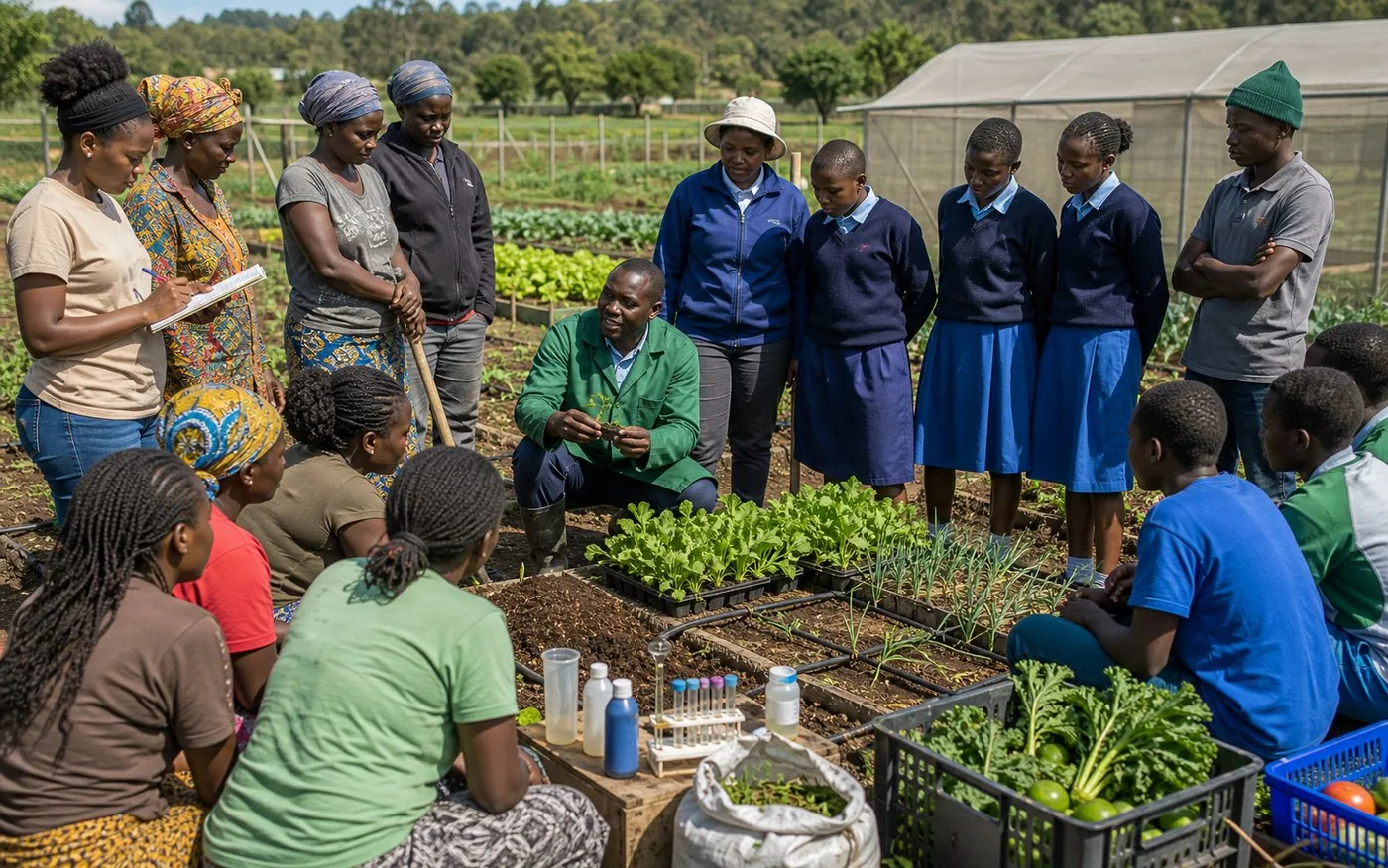
Community demonstration farm training with irrigation, seedlings, and soil testing

Primary hub: Climate-Smart Agriculture Hub

Food security

Demonstration farms

Hands-on learning sites for climate-smart crop production, irrigation, organic practices, seedling production, soil conservation, and post-harvest handling.

Training

Practical field days

Farmers, schools, youth, and women groups learn through real crop, water, soil, and nursery systems.

Production

Climate-smart practice

Plots show crop diversification, irrigation timing, organic practices, and soil conservation methods.

Evidence

Field performance tracking

Teams monitor crop performance, water use, soil condition, attendance, and adoption.

Scale

Replicable learning sites

Successful methods can be packaged for farmer groups, schools, and partner-supported projects.

Core components

  • Crop demonstration plots
  • Drip irrigation and water-use tracking
  • Seedling and nursery production areas
  • Soil conservation and organic practice zones
  • Training records and farmer feedback tools
  • Value-addition and post-harvest learning points

Who can use it

  • Farmer groups and schools
  • Youth and women groups
  • Local extension partners
  • NGOs and donor projects
  • Research and university partners

Impact logic

Practical skills, stronger production, and clearer evidence

The project helps communities learn by doing while giving partners measurable evidence on training, crop performance, water use, and adoption.

Prepare

Set up the site

Select crops, water systems, training groups, and indicators.

Train

Run field learning

Use field days, demonstrations, and hands-on practice.

Improve

Measure and adapt

Use evidence to refine practices and expand what works.

Project partnership

Use Demonstration farms as a demonstration site, research pilot, or funded community support model

Partner on this project